










By Toetik Koesbardiati
Last August, archaeologists discovered a number of artefacts in Indonesia dating back between 1 million and 1.4 million years. The findings could transform theories of early human migrations, according to an article the team published in the journal Nature.
People often consider migration to be a new phenomenon. In fact, migration has been a characteristic of human existence for millions of years.
The beginnings of human migration date back to the origins of humans as a species. Studies show that the now-extinct Homo erectus, the oldest human species, had already explored the entire earth. Homo sapiens, our species, is the last in this line. Homo sapiens’ ability to explore the earth between about 1.89 million and 110,000 years ago was remarkable. Compared to other species such as Neanderthals, Homo sapiens were far superior in controlling certain areas as their living space.
Ancient migration
The discovery of human fossils and artefacts in Africa, Europe, Asia and Australasia has made the study of human origins even more exciting. A comparison of the morphology of both fossils and artefacts shows that there are interconnections between regions. This indicates that the link between these regions is migration.
In general, there are two theories that explain human migration in ancient times.

The first is Out of Africa, which explains that human development was centred in Africa and then spread throughout the world. Through DNA analysis of living people, geneticists can trace where humans came from and when they began to spread.
The second theory is the Multiregional Evolution Model, which explains that Homo erectus, the ancestor of Homo sapiens, was already spread throughout the world. Modern humans developed in each of these regions. Experts say that the spread of modern humans from Africa to all regions of the earth was through single dispersal and multiple dispersal, assuming that they travelled out of Africa from Arabia peninsula, India all the way to Indonesia. was along the coast to Indonesia, and through the continent to Europe and Asia, and then on to America.
There are several reasons why modern humans (Homo sapiens) spread throughout the region. Several experts explain that in addition to the issue of food needs, other factors that influenced human migration were climate, drought, and environmental variations.
When the climate improved, it is likely that human groups that had been separated into small groups would unite and then multiply. The ability to make tools (technological development) helped them to overcome natural obstacles.
Based on reconstructions, experts say modern humans roamed to warm, humid areas that provided more food sources; a combination of forests, grasslands and waterways.
Traces of migration have also been found in Indonesia through agriculture that developed around 11,000 years ago in Southeast Asia. Archaeological data shows that rice fossils were found in Sulawesi, which are believed to be the first development of agriculture in Indonesia.
The most massive migration hypothesised to have affected Southeast Asia (including the continent and waters) and the Pacific was the migration from Austronesia of a group of communities that spoke Austronesian languages which are believed to have originated in Taiwan. Cultural and linguistic similarities to Austronesian are found in Thailand, Vietnam, Cambodia, the Philippines, Indonesia, and the Pacific region. Traces of Austronesian culture have even been found in Madagascar, brought there by inhabitants of Borneo.
An important factor driving ancient migration was the climate and ecology that shaped human history, emphasising that biodiversity played an important role in human survival and mobility.
In Indonesia, the Majapahit Empire was an example of a regional power that succeeded in uniting several Southeast Asian regions under its rule.
During the colonial era around the 15th century, Europeans began expanding into various parts of the world, such as North and South America, Australia, and Southeast Asia. The main objective of this expansion was to find new territories that were more economically profitable and more suitable for habitation.
Along with colonisation came an era of slavery that caused massive migration, especially from Africa to South America and the Caribbean. The development of plantation industries such as tobacco and sugarcane increased the demand for labour, forcing many Africans to move as slaves. After slavery began to decline, a system of contract labour developed, triggering migration from India and China to various regions such as the Caribbean, the Philippines, and South America.
In the modern era, migration continues for economic reasons and in search of better opportunities. The famine in Ireland in 1845 triggered large-scale migration to the United States and other new world regions. After World War II, countries experiencing economic growth, such as Japan, Korea, and countries in the Middle East, became destinations for migration.
The demand for labour in the industrial and oil sectors attracted many people to move in search of a better life.
The modern world
The latest developments related to migration are more modern needs such as education, better jobs, and diplomatic assignments. The era of migrant workers also began, especially in industrialised countries. In Asia, countries such as Hong Kong, Singapore, and Malaysia became the main destinations for migrants. On the other hand, European and American countries, Australia, and New Zealand became destinations for education.
In addition to migrant workers, migration today is largely influenced by structural violence. Conflicts, political pressure, poverty, gender inequality, discrimination, lack of access to healthcare, hunger, religious differences and so on, have triggered large-scale migration. Of course, the goal of this migration is a better and safer life.
Human migration from South America to the United States is an example of a society experiencing structural violence. Migration to Europe, whether from Africa or the Middle East, is an attempt to find peace in a life free from conflicts or persecution and to secure a better future.
Migration has consequences for the destination country. Structural violence has not only psychological but also physical consequences. Therefore, mental and physical health issues become a major concern. Recently, there have been many protests directed at migrants, but conversely, there have also been protests from migrants against their destination countries.
Consequences of migration
It is clear that migration has many consequences. Acculturation, language, way of life, mentality and even disease are inevitable consequences. Migration produces significant effects on the receiving population, including cultural mixing, social change, and shifts in technological practices. For migrants themselves, the consequences involve processes of adaptation—both to the physical environment and to the social life of the host community. It is not uncommon for conflicts to be triggered by differences between migrant groups or between migrants and locals who feel that their rights as indigenous people have been taken away. Generally, this is related to livelihoods.
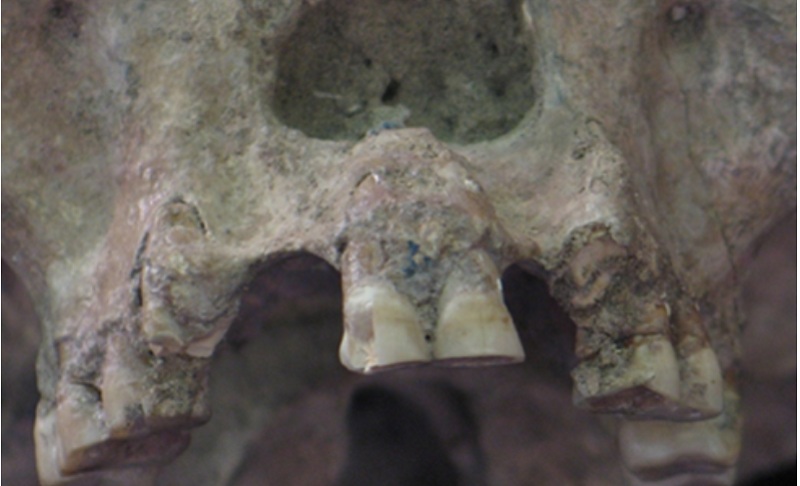
COVID-19 is an example of how migration or mobility has consequences for the spread of disease. Research on the spread of leprosy throughout the world has shown that it was caused by migration in various contexts (slavery, trade, etc.). Research on human skeletal remains in Papua has shown the presence of infectious diseases that are believed to have been brought by soldiers who entered the Papua region. Basically, migration is not only the movement of people but also the movement of microbes and associated diseases.
ALSO READ: What hypnosis can teach us about Artificial Intelligence
Yet, despite its difficulties and its mixed bag of consequences, humans have always migrated, either in groups or individually, to seek freedom from war and conflict, to escape famine and poverty, to seek new economic opportunities and jobs, to flee religious intolerance or political repression, or even to trade and travel to new places.
Toetik Koesbardiati is an expert in paleoanthropology, paleopathology, and bioarchaeology at the Department of Anthropology and Museum Ethnography and Death Study at Airlangga University, Surabaya, Indonesia.
Delta Bayu Murti is an expert in paleopathology and bioarchaeology at the Department of Anthropology at Airlangga University, Surabaya, Indonesia.
Originally published under Creative Commons by 360info™