










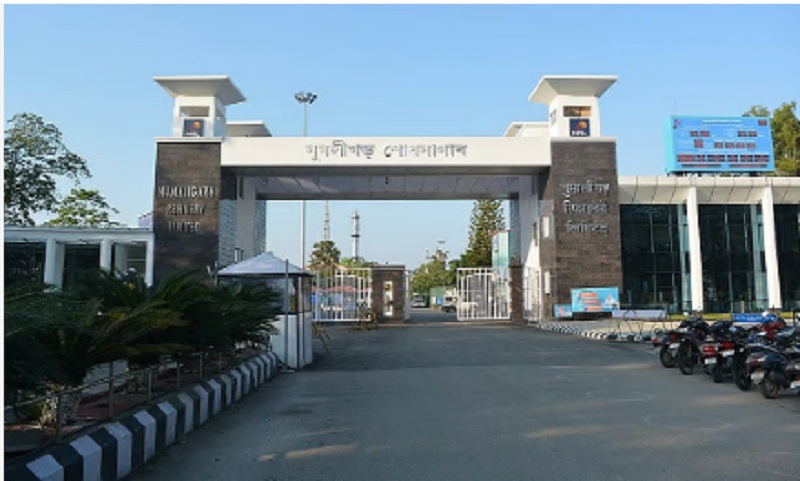
Guwahati: Numaligarh Refinery Ltd (NRL) is set to process imported crude oil for the first time once its ongoing expansion project, which will raise its refining capacity from 3 million tonnes per annum (MTPA) to 9 MTPA, is commercially completed, Oil India Chairman and Managing Director Ranjit Rath said.
NRL, a subsidiary of Oil India, currently relies primarily on domestically produced crude oil to manufacture petroleum products such as petrol and diesel. Speaking on the sidelines of India Energy Week, Rath said, “First crude-in happened on December 31 and is on track for the staged completion of the expansion by the year-end.”
“First crude-in refers to the initial feeding of crude oil into the main processing unit for trial runs and commissioning of facilities. The expansion will be commissioned in phases, with the entire project scheduled for completion by December 2026,” he said.
The Rs 33,901-crore expansion project includes the installation of a 6 MTPA crude distillation unit (CDU), along with associated crude oil terminals and pipelines, designed to process Arab Light and Arab Heavy crude in a 30:70 ratio.
Once operational, NRL will begin processing imported crude to bridge the shortfall in domestically available feedstock. The additional crude requirement will be met through imports routed via Paradip Port in Odisha. A cross-country pipeline of approximately 1,640 km has been laid from Paradip to Numaligarh to transport the imported crude oil.
Rath said NRL has signed a memorandum of understanding with Bharat Petroleum Corporation Ltd (BPCL) to facilitate crude sourcing, with BPCL set to be the primary importer. He added that the refinery is capable of processing over 100 different crude assays.

The expansion project also includes the establishment of a 360,000-tonnes-per-annum polypropylene unit (PPU) at an estimated cost of Rs 7,231 crore, along with related facilities.
While the expanded refinery is expected to meet rising demand for automotive fuels in eastern and northeastern India and generate surplus for exports to neighbouring countries such as Myanmar and Bangladesh, the polypropylene unit is aimed at boosting downstream industries, including plastics, packaging, automotive components and consumer goods, in the region.
NRL currently exports petroleum products to Bangladesh through the India-Bangladesh Product Pipeline and to Bhutan via its marketing partner, BPCL. Rath said fuel exports to Bangladesh are continuing smoothly, with all payments being received on time and no backlog.
ALSO READ: Reliance Jio empowers over 350 colleges & schools in Northeast through AI
As part of its long-term growth strategy, NRL plans to strengthen its core capabilities by expanding logistics infrastructure, building high-capacity grid connectivity for reliable power supply, increasing the share of renewable energy in its portfolio, and diversifying into specialty chemicals and active pharmaceutical ingredients.
The company is also developing a bioethanol plant with a capacity of 50,000 tonnes per annum, using bamboo as feedstock.