










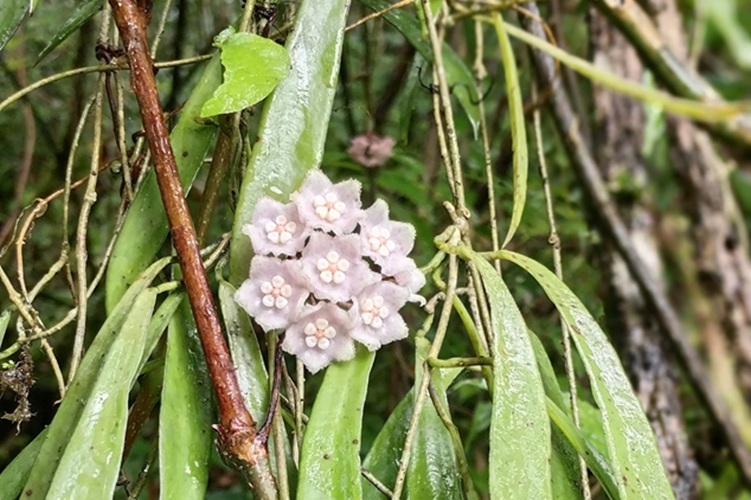
Kohima: Researchers from Nagaland University have identified a new plant species in the state’s high-altitude forests, drawing attention to the rich but under-documented biodiversity of the region and the crucial role played by community-protected forests in conservation.
The newly discovered species, named Hoya nagaensis, was found during systematic botanical surveys in remote forest areas of Nagaland.
University officials said the discovery highlights the ecological significance of the state, which has more than half of its 16,579 sq km geographical area under forest cover, much of it still unexplored by scientists.
The research was carried out to address gaps in scientific knowledge arising from limited documentation of Nagaland’s forest flora.
Detailed fieldwork and taxonomic analysis were undertaken to better understand plant diversity and conservation needs in the region.
The study was supported by Nagaland University’s Start-Up Project for Young Faculty and led by Dr Gyati Yam, Assistant Professor in the Department of Forestry, along with researchers Vieneite-o Koza and Joynath Pegu.

Findings from the study have been published in an international journal specialising in plant and fungal taxonomy, systematics and global biodiversity.
Vice-Chancellor Prof Jagadish Kumar Patnaik said the discovery reinforces Northeast India’s status as a biodiversity-rich region and demonstrates the importance of community-managed forests as safe havens for rare and endemic plant species.
According to Dr Yam, the research focused on exploring high-altitude forest ecosystems, documenting previously unknown plant species and evaluating the conservation status of rare flora.
Special attention was also given to understanding how community-reserved forests help protect fragile ecosystems.
Researchers noted that Hoya nagaensis exhibits distinct leaf forms and floral traits that set it apart from other species in the genus Hoya.
The plant has so far been recorded only at a single site in the Kavünhou Community Reserved Forest in Phek district.
Given its extremely limited distribution and threats from shifting cultivation and forest disturbance, the species has been provisionally assessed as Critically Endangered.
ALSO READ: Kaziranga records 945 freshwater turtles of seven species in latest survey
Researchers said its survival underlines the effectiveness of traditional forest stewardship practised by local Naga communities.
Beyond the discovery of a single species, the study points to the Eastern Himalayas’ temperate forests as promising reservoirs of botanical diversity.
By documenting the plant’s physical characteristics, habitat and ecological context, the research strengthens the taxonomic framework of the Hoya genus and provides valuable baseline data for future botanical and ecological studies.
The research team plans to continue monitoring the species in the wild, study its ecology and pollination biology, assess long-term conservation risks and explore nearby forest areas for additional undocumented plant species.