










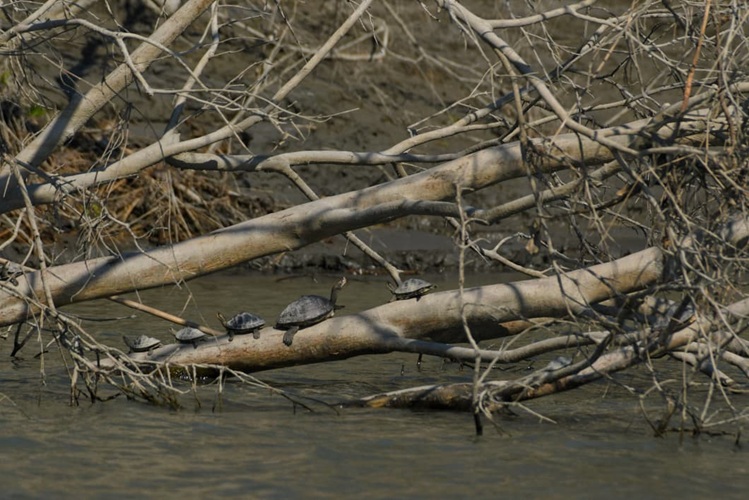
Nearly a thousand freshwater turtles representing seven species have been documented along the Brahmaputra river stretch within Kaziranga National Park and Tiger Reserve (KNPTR), underscoring the region’s importance as a key habitat for aquatic biodiversity.
According to park authorities, the survey recorded a total of 945 turtles during a systematic assessment carried out between January 14 and 18.
The exercise formed part of the fifth annual survey of aquatic reptiles in the Kaziranga landscape and was conducted jointly by KNPTR officials and the India Turtle Conservation Programme (ITCP), with a special focus on freshwater turtles and tortoises.
The rapid boat-based survey covered about 174 kilometres of the Brahmaputra as it flows through the protected area.
Of the turtles recorded, 876 were hard-shelled and 69 were soft-shelled, spanning seven different species.
Officials said the survey included 55 direct sightings of hard-shell turtles and 13 sightings of soft-shell turtles, among them four Black Softshell Turtles.

The Black Softshell Turtle, which is critically endangered and endemic to the Brahmaputra basin, continues to face serious threats from habitat degradation, predation and overexploitation.
However, conservation initiatives in Kaziranga and at sites such as the Nagshankar Temple area in Biswanath district have contributed to improved protection for the species, officials noted.
The Brahmaputra river system is recognised internationally as a freshwater biodiversity hotspot and a Turtle Priority Area.
ALSO READ: Mumbai Metro warns against unsafe behaviour after Varun Dhawan video goes viral
The wider Kaziranga landscape alone supports 17 of the 32 freshwater turtle and tortoise species found in India.
Beyond turtles, the survey also documented 92 bird species and recorded the presence of other key riverine and wetland fauna, including the smooth-coated otter and the Gangetic river dolphin.
Sightings of Kaziranga’s iconic ‘big five’ — the tiger, greater one-horned rhinoceros, elephant, swamp deer and wild water buffalo — were also reported during the exercise.
Based on species diversity, habitat condition and disturbance levels, the study identified five areas within the river stretch as conservation priority habitats.
Park officials said continued collaboration with ITCP and sustained monitoring efforts would be crucial to protecting the ecological health of the Brahmaputra and adapting conservation strategies to the river’s changing dynamics.