










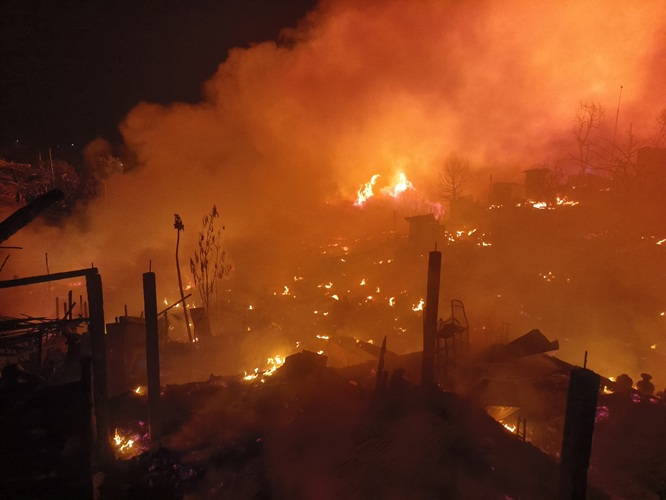
A large fire tore through a Rohingya refugee camp in Bangladesh’s Cox’s Bazar district earlier this week, destroying hundreds of shelters and forcing more than 2,000 people from their homes, aid agencies said on Thursday.
The blaze broke out in the early hours of Tuesday at Camp 16, one of over 30 densely populated camps that together form the world’s largest refugee settlement.
The camps are home to more than one million Rohingya who fled violence and persecution in neighbouring Myanmar.
Firefighters managed to bring the flames under control after nearly three hours.
Although no deaths were reported and only a few people suffered minor injuries, the damage was extensive.
Many families lost all their belongings, including vital identity documents, according to humanitarian organisations working in the area.

The Norwegian Refugee Council said the fire destroyed at least 335 shelters and damaged another 72.
Several water and sanitation facilities were affected, along with 11 learning centres and parts of the camp’s internal pathways. The cause of the fire has not yet been confirmed.
The International Organisation for Migration (IOM) described the incident as a fresh crisis for already vulnerable families.
“In overcrowded camps, fires don’t just destroy shelters—they strip families of safety, dignity and access to basic services,” said Lance Bonneau, IOM’s Chief of Mission in Bangladesh.
The Rohingya refugee population in Cox’s Bazar surged after more than 700,000 people crossed into Bangladesh in 2017, following a military crackdown in Myanmar’s Rakhine state.
The operation drew widespread international condemnation, with the United Nations and rights groups accusing Myanmar of ethnic cleansing and genocide—allegations the country has denied.
A related case is currently being heard at the International Court of Justice in The Hague.
More Rohingya have continued to flee in recent years due to renewed fighting in Rakhine between Myanmar’s military and armed groups opposed to the junta that seized power in 2021.
In the aftermath of the fire, aid agencies including the IOM and the Norwegian Refugee Council launched emergency relief operations, distributing items such as blankets, cooking utensils, hygiene kits, mosquito nets and solar lights.
Efforts are also underway to restore damaged water and sanitation services.
Humanitarian groups warned that the incident once again highlights the severe fire risks in the camps, where most families live in tightly packed bamboo-and-tarpaulin shelters originally intended to last only a few months.
According to aid agencies, thousands of fires have been recorded in the camps over the past several years, affecting tens of thousands of refugees.
Plans to replace these structures with safer, semi-permanent shelters have stalled due to funding shortages.
ALSO READ: Taylor Swift to enter Songwriters Hall of Fame as youngest woman inductee
The Norwegian Refugee Council said proposals to build 50,000 such shelters were put on hold after major cuts to international aid earlier this year.
Global reductions in humanitarian funding—including sharp cuts by the United States and several European countries—have left relief operations severely underfunded.
In 2025, only about half of the required funds for the Rohingya response were received, leaving a shortfall of nearly $467 million, the council said.
Aid agencies have renewed their appeal for urgent financial support, warning that without increased funding, fires and other disasters will continue to devastate refugee communities.
Immediate needs, they said, include food assistance, warm clothing, basic household items and safer housing to prevent similar tragedies in the future.