










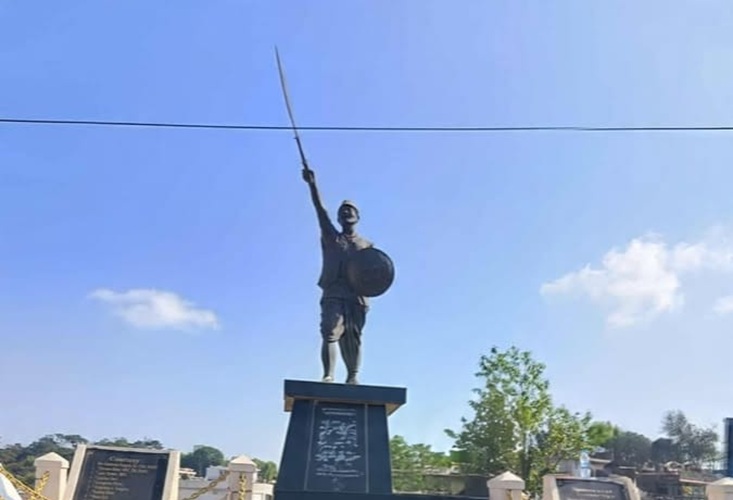
The Jaiñtia National Council (JNC) commemorated the 163rd martyrdom anniversary of freedom fighter U Woh Kiang Nangbah at Khliehriat in Meghalaya’s East Jaiñtia Hills district, renewing its call for unity to protect Jaiñtia land, culture and traditional institutions.
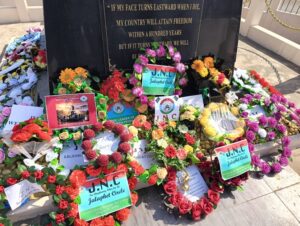
JNC leaders and members from various zones, units and circles assembled at the Kiang Nangbah memorial stone, where the legendary leader was executed by British colonial forces in 1862, and paid floral tributes in his memory.
Addressing the gathering, JNC president Sambormi Lyngdoh drew parallels between the resistance led by U Woh Kiang Nangbah in the 19th century and what he described as present-day threats to Jaiñtia society.
He said colonial authorities in the past had deceived village elders and Dollois, undermining traditional systems, and warned that similar tactics were being repeated in contemporary times.
Lyngdoh recalled how the Doloi of Nartiang Elaka had convened what is remembered as one of the largest assemblies in Jaiñtia history to oppose foreign interference in Pnar customs and culture, a movement from which U Woh Kiang Nangbah emerged as a leader.

He narrated the symbolic episode associated with Nangbah’s rise, when the freedom fighter leapt into the Myntdu river and emerged holding a sacred leaf, which later became a symbol of unity among the Jaiñtia people.
The JNC president alleged that governments and external interests were now attempting to influence village elders and elaka leaders through assurances that could lead to the alienation of ancestral land.
ALSO READ: Four Mizoram constables, five women arrested in fake drug fraud
He cited industrial projects, mining activities and boundary disputes as examples of what he termed renewed pressure on areas protected under the Sixth Schedule of the Constitution.
Lyngdoh also cautioned against internal divisions, stating that betrayal from within had contributed to Nangbah’s downfall.
He called for unity among Jaiñtia people, urging them to uphold common principles and collective resolve to safeguard their land and institutions.
The programme concluded with a pledge by JNC members to uphold the legacy of U Woh Kiang Nangbah and to remain united against what they described as threats to Jaiñtia identity and sovereignty.