









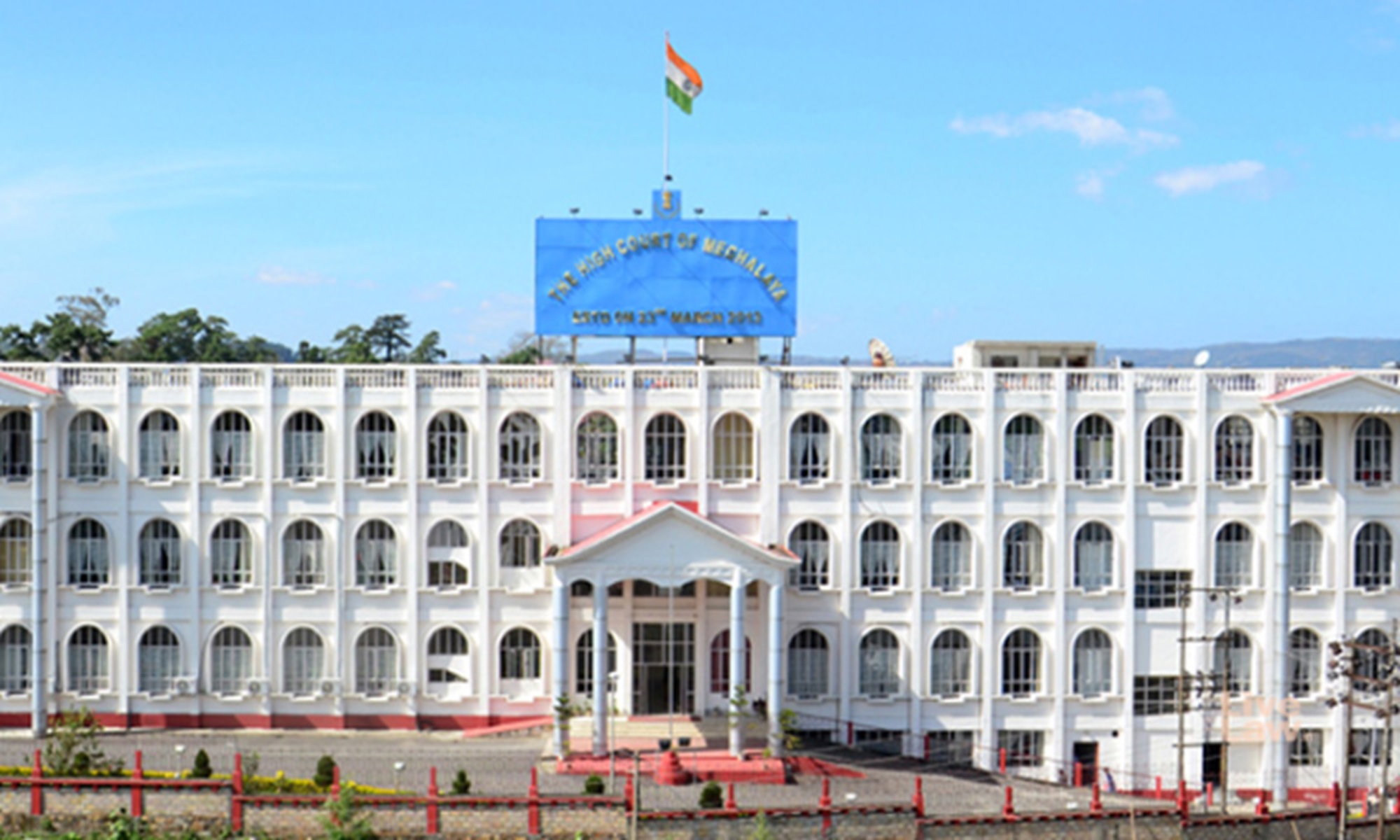
Shillong: The Meghalaya High Court on Monday declined to interfere with the ongoing election process of the Meghalaya Cricket Association (MCA) while disposing of a writ petition filed by the Shillong Cricket Association (SCA), which had challenged the conduct of the MCA General Elections 2025 on grounds of irregularities, lack of transparency and violation of election rules.
The petition was heard by Justice H.S. Thangkhiew, who observed that although certain discrepancies existed in the appointment of the Electoral Officer and the election schedule, the MCA’s internal grievance redressal mechanism provided adequate remedies and that court interference at this stage was not warranted.
The Shillong Cricket Association, represented through its president Peter Macdonald K. Sawian, had moved the High Court against the Meghalaya Cricket Association, its Returning Officer Hemant Nazary, the Board of Control for Cricket in India (BCCI), MCA honorary secretary Rayonald Kharkamni, and the Deputy Commissioner of East Khasi Hills district. The SCA is an affiliated unit of the MCA, which in turn is affiliated to the BCCI.
The SCA contended that the electoral process adopted for the MCA elections scheduled for December 2025 was arbitrary, opaque and in violation of both the MCA Constitution and the BCCI’s Memorandum of Association and regulations.
A major objection raised by the petitioner related to the appointment of Hemant Nazary, a former Chief Electoral Officer of Assam, as the Electoral Officer for the MCA elections.
The petitioner argued that Rule 36 of the MCA Constitution mandates that the Electoral Officer must be a former Central or State Election Commissioner, and that the appointment of a former Chief Electoral Officer from a neighbouring state was permissible only if no such officer was available within the state.

Another key grievance pertained to the election schedule, particularly the preparation and publication of the electoral rolls.
According to the petitioner, the draft electoral roll was published on November 26, 2025, and the final electoral roll on November 27, 2025, without disclosing the names of the authorised voting representatives of the affiliated district associations.
The names of the voting representatives were disclosed only on December 3, after the objection period had closed and after the nomination and scrutiny stages were completed, effectively denying members a meaningful opportunity to challenge voter eligibility.
The petitioner also pointed out that the campaigning period commenced on December 2, before the final voters’ list was made public, allegedly in violation of the rule requiring communication of the final list at least one week before polling.
It was further contended that the president of the Shillong Cricket Association, who had intended to contest for the post of vice-president of the MCA, withdrew his candidature on December 2 due to dissatisfaction with the conduct of the election process.
Representations were subsequently made to the Electoral Officer and the Deputy Commissioner on December 4, but with polling scheduled for December 9, the writ petition was filed on December 8.
Appearing for the petitioner, senior counsel Dr N. Mozika, assisted by advocate Ms K. Gurung, argued that the alleged irregularities were grave, affected public interest and justified invocation of the High Court’s writ jurisdiction.
Reliance was placed on judicial precedent to submit that courts could intervene in election processes in exceptional circumstances where fairness and transparency were compromised.
Opposing the petition, senior advocate S. Dutta, appearing for the MCA along with advocates I. Lahiri, P. Sengupta and K.V. Kharlyngdoh, questioned the locus of the petitioner, arguing that the SCA was merely a voter and not a contesting candidate.
It was also contended that the petition was a motivated afterthought filed only after the withdrawal of the petitioner’s candidate.
The MCA maintained that the appointment of the Electoral Officer was valid under BCCI guidelines and that the election procedure followed was identical to the 2022 MCA elections, in which the petitioner had participated without objection.
The disclosure of representatives’ names at a later stage was described as a logistical necessity that caused no prejudice.
The state government was represented by Additional Advocate General N.D. Chullai, assisted by Government Advocate Ms R. Colney.
After hearing both sides, the High Court reiterated that courts are generally reluctant to interfere once an election process has commenced, particularly where alternative remedies are available.
The court noted that Rule 36(3) of the MCA Constitution vested the Electoral Officer with authority to decide disputes relating to candidacy and voter eligibility, and that Rules 40 and 41 provided for grievance redressal through an Ombudsman.
The court also took note of the fact that the president of the Shillong Cricket Association was a nominated member of the MCA Apex Council that had ratified both the appointment of the Electoral Officer and the election schedule, a factor which weighed against judicial intervention.
While observing that the appointment of a former Chief Electoral Officer from Assam appeared to overlook the prescribed hierarchy under the rules, and that the election schedule curtailed meaningful objections regarding voter eligibility, the court held that these issues should be addressed by the Electoral Officer himself under the MCA rules.
Accordingly, the High Court disposed of the petition, leaving it open to the Chief Electoral Officer to take corrective measures, if necessary, to ensure transparency, fairness and probity in the conduct of the MCA elections, which had been postponed to December 19 pursuant to interim court orders.