










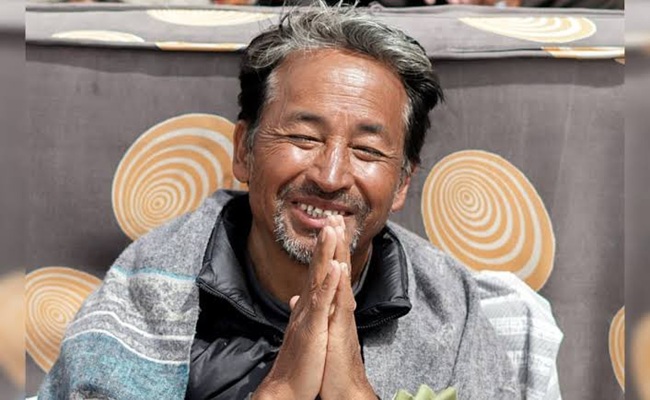
The Supreme Court on Monday adjourned to January 7, 2026, the hearing on a petition filed by Gitanjali J Angmo, wife of climate activist Sonam Wangchuk, challenging his detention under the National Security Act (NSA).
A bench comprising Justices Aravind Kumar and N.V. Anjaria deferred the matter citing lack of time.
Wangchuk was detained on September 26 under the stringent preventive detention law, two days after violent protests in Ladakh over demands for statehood and inclusion under the Sixth Schedule left four people dead and around 90 injured.
Authorities have accused him of inciting the violence.
The plea contends that the detention is illegal, arbitrary and violative of Wangchuk’s fundamental rights.
It alleges that the detention order is based on “stale FIRs, vague imputations and speculative assertions” and lacks any live or proximate link to the grounds cited for invoking the NSA.

According to the petition, the use of preventive detention powers in this case amounts to a “gross abuse of authority” and undermines constitutional safeguards and due process, rendering the detention order unsustainable in law.
The matter has been adjourned on earlier occasions as well.
On November 24, the court deferred the hearing after Solicitor General Tushar Mehta, appearing for the Centre and the Union Territory of Ladakh, sought time to respond to a rejoinder filed by Angmo.
Earlier, on October 29, the court had sought responses from the Centre and the Ladakh administration on the amended plea.
ALSO READ: India’s rise to No. 3 in global AI competitiveness a major milestone: Arunachal Dy CM
Angmo has argued that it is implausible to link Wangchuk to the violence in Leh on September 24, noting that he has spent over three decades contributing to grassroots education, innovation and environmental conservation in Ladakh and elsewhere in the country.
She said Wangchuk had publicly condemned the violence through social media and reiterated his commitment to peaceful methods, describing the unrest as the saddest day of his life.
The National Security Act empowers the Centre and state governments to detain individuals to prevent actions deemed prejudicial to national security or public order.
Detention under the law can extend up to 12 months, though it may be revoked earlier.